RADON MITIGATION SERVICE
Rely On Us for Radon Mitigation in Missoula & Surrounding Areas
Radon is a reality of living in Western Montana, with the state ranking 3rd in the country for homes with radon levels above 20 pCi/L. At Murphy Radon, we provide Missoula, Fort Collins, Loveland, Windsor, Greeley, and the Bitterroot Valley areas with professional, certified radon mitigation services that prioritize your family’s health and your home’s value.
NRPP
Certified
Established in 2014
Customer- Centered
Quality
Guarantee
radon mitigation
How Does Radon Mitigation With Murphy Radon Work?
At Murphy Radon, we’ve refined our radon testing and mitigation process to be as transparent and reliable as the systems we install. It starts with a simple phone call or email. We discuss your home’s layout, foundation type, and current radon levels.
Are you a real estate professional? Thanks to our licensed broker expertise and full MLS access, we can often generate a professional, accurate quote within minutes to keep your transaction moving.
OUR APPROACH
How Long Does Radon Mitigation Take? How Fast Will My Radon Levels Drop?
Within 2 to 3 days of your installation, we will have verified results showing that your levels have dropped significantly. By the time we’re done with your property, you won’t just assume the air is safer… You’ll have the data to prove it.
Efficient Installation
Most residential systems in the Missoula area are completed in just 3 to 5 hours. For complex projects, the work may extend into a second day.
Immediate Action
The moment we flip the switch on your new RadonAway fan, the system begins drawing gas out from under your foundation.
Fast Results
It typically takes 24 hours for the radon levels in a home to fully stabilize. We follow strict NRPP and AARST protocols, which require us to wait at least 24 hours after activation.
How IT WORKS
Our Simple 4-Step Process
From initial consultation to verified results, we make radon mitigation straightforward and stress-free.
Schedule Assessment
Contact us for a consultation. We’ll discuss your home construction and how to best move forward with testing.
Custom System Design
We’ll design a tailored mitigation system that fits your home’s specific footprint and aesthetic requirements.
Professional Installation
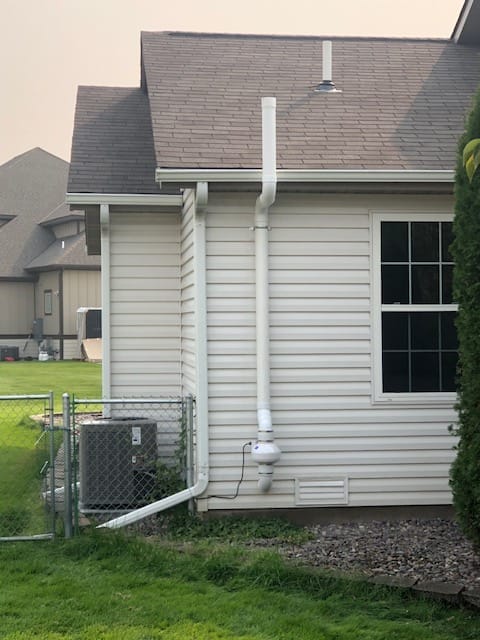
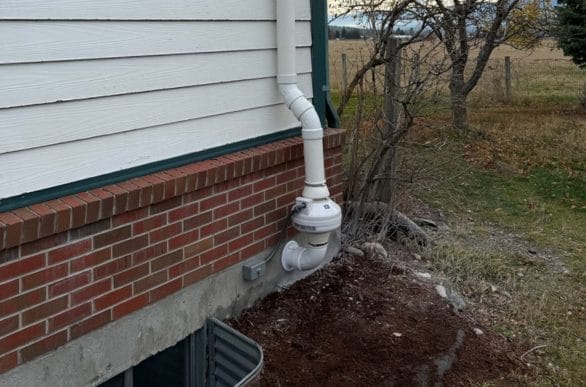
Our certified crew installs a high-performance radon fan and PVC venting system to draw gas from beneath your home and vent it safely above the roofline.
Post-Mitigation Verification
Once the system is active, we conduct a follow-up radon test to ensure levels have dropped below the EPA action limit.
Questions?
Frequently Asked Questions
Can you fix a radon mitigation system installed by another company?
Absolutely. We don’t just install new systems… We’re Western Montana’s specialists in legacy system recovery. Many local homes have older, low-voltage Fantech systems inherited from previous installers who may no longer be in business. These systems require a specific technical touch that most modern competitors simply aren’t equipped to handle.
If your existing system is vibrating, making a loud grinding noise, or if the manometer (the vacuum gauge) is showing zero pressure, don’t assume you need a total replacement. We can diagnose whether you have a failed fan, a blocked pipe, or a pressure issue. We take pride in rescuing older systems, ensuring they meet current NRPP standards, and providing the repairs necessary to keep your home safe without the cost of a full new install.
Does Montana’s weather affect my radon levels?
Yes. In the Missoula and Bitterroot Valley, our dramatic seasonal shifts have a direct impact on radon concentrations. During our cold Montana winters, we experience the stack effect. As you turn on your heater, warm air rises and escapes through the upper levels and roof of your home, creating a vacuum in the lower levels. This vacuum literally sucks radon gas out of the soil and into your living space.
Furthermore, when the ground freezes or is capped by heavy snow, radon gas can’t escape through the soil outside, so it takes the path of least resistance: the unfrozen ground directly beneath your warm home. Our systems are specifically engineered to counteract these pressure changes, ensuring that even during a January deep freeze or a heavy spring thaw, the gas is being diverted safely away from your family.
What is a “manometer,” and why does it matter in radon mitigation?
The U-shaped tube with blue or red liquid attached to your mitigation pipe is called a manometer. It’s essentially the heartbeat monitor for your system, but it’s important to understand that a manometer does not measure radon levels. Instead, it measures vacuum pressure to indicate whether or not your fan is on and/or working properly.
When the fan is running, it creates suction that pulls the liquid up on one side of the tube. If the levels on both sides of the “U” are even (at zero), it means there is no vacuum, and your fan has likely failed or lost power. During our installation, one of our experts will walk you through exactly how to read your specific gauge. We want you to feel confident that with one quick glance into your utility room or garage, you can verify your system is doing its job 24/7.
Are radon mitigation systems loud?
Generally, no. A well-installed system should sound like a quiet, steady hum, similar to a modern refrigerator. At Murphy Radon, we primarily use RadonAway fans, which are the industry gold standard for quiet, vibration-free performance.
The noise people often associate with radon systems is usually caused by poor installation, such as pipes vibrating against wall studs or fans mounted directly to resonant surfaces without proper isolation. We take extra care in our mounting process to minimize vibration.
If you have a legacy system that has become loud over time, it’s often a sign of bearing wear in the fan or debris in the housing. We can service these noisy systems to restore the quiet, peaceful environment of your home while maintaining high-level air protection.
Why ChooSe Us
Montana’s Most Reliable Radon Experts
There is a reason we are consistently booked 6–8 weeks in advance: quality is worth the wait. In a state with some of the highest radon levels in the country, a “quick fix” isn’t enough. We engineer custom mitigation systems designed specifically for Montana’s unique soil compositions and climate. When it comes to your family’s respiratory health, the most important thing isn’t how fast the job gets done… It’s how well it’s done.
10+
Years of Experience
With over a decade of experience, we bring unmatched expertise and a deep understanding of regional soil conditions.
Licensed
Real Estate Broker
Licensed real estate broker on staff, with full MLS access, allowing accurate estimates within minutes – faster than any local competitor.
100%
Certified Technicians
We are fully certified by the NRPP, ensuring your system meets the highest national safety standards.
Quality
Industry Products
We stand behind our products, providing you with only the best in the industry, like RadonAway and more.
CERTIFICATIONS & AFFILIATIONS
Trusted by National Organizations
Our extensive certifications and professional affiliations demonstrate our unwavering commitment to maintaining professional excellence and staying at the forefront of radon mitigation technologies and industry best practices. Every certification represents countless hours of training and continuing education.

NRPP Certified
We’re National Radon Proficiency Program (NRPP) certified professionals, maintaining the highest industry standards for radon measurement and mitigation expertise.

IEA Member
As Indoor Environments Association (IEA) members, we’re committed to advancing radon science and technology through continuing education.

EPA Approved
We adhere to Environmental Protection Agency (EPA) approved radon testing and mitigation protocols, ensuring compliance with federal safety guidelines.
Important Facts
What You Need to Know About Radon in Montana
Ranked 3rd
for homes with radon levels above 20 pCi/L
47%
of homes tested in Montana show levels above 4 pCi/L
More than 1/2
of homes tested in Missoula County tested show elevated radon levels (>4 pCi/L)
5.9 pCi/L
is the average indoor radon level recorded in Missoula County
CLIENT REVIEWS
What Our Clients Say
Protecting your home from radon is a serious responsibility, and it’s one we don’t take lightly. We are proud to have helped thousands of families achieve better air quality. Read through the experiences of our clients to see how our commitment to technical precision and transparent communication has made us a leader in radon safety across the region.
★★★★★

Professional, honest, and respectful of our home. Mitigation system was neatly installed and dropped our average Radon reading from 9.3 to 0.9 pCi/L. Highly recommend Sean and Sabrina.
Bruce Pallante
★★★★★
Sean & Sabrina were great to work with and communicated very well through the process. Joshua, the service tech, did an amazing job installing our mitigation system! Very clean and professional work. 10/10 recommend!
Trent Drinkwalter
★★★★★
Murphy Radon is so easy to work with! We had a radon mitigation system installed several years ago and the work was done quickly and professionally with no disruption to our tenants.
Jessica Morina
BLOG & RESOURCES
Latest Radon News & Insights
Stay informed on the latest developments in indoor air quality. From updates on testing protocols and mitigation technology to new health research and legislative changes, we bring you the essential information you need to better protect your home and family.

Does Radon Gas Smell? How Can I Detect Radon?

How Does Radon Mitigation Work?
When Was Radon Gas Discovered? Who Discovered Radon?
Take Action Today
Your Partner in Radon & Indoor Air Quality
Addressing radon is about more than just hitting a specific number on a report… It’s about the peace of mind that comes from knowing your home is as safe as possible. While radon is an invisible and serious health risk, it is also a completely solvable one. Invest in expert solutions that ensure you and your loved ones can breathe easier for years to come.
Quick contact Form
"*" indicates required fields